Meet Plumsense at IAAPA Expo 2026 · Booth W2282 · Orlando, FL · Nov 17–20, 2026
 Visit us at www.plumsense.com


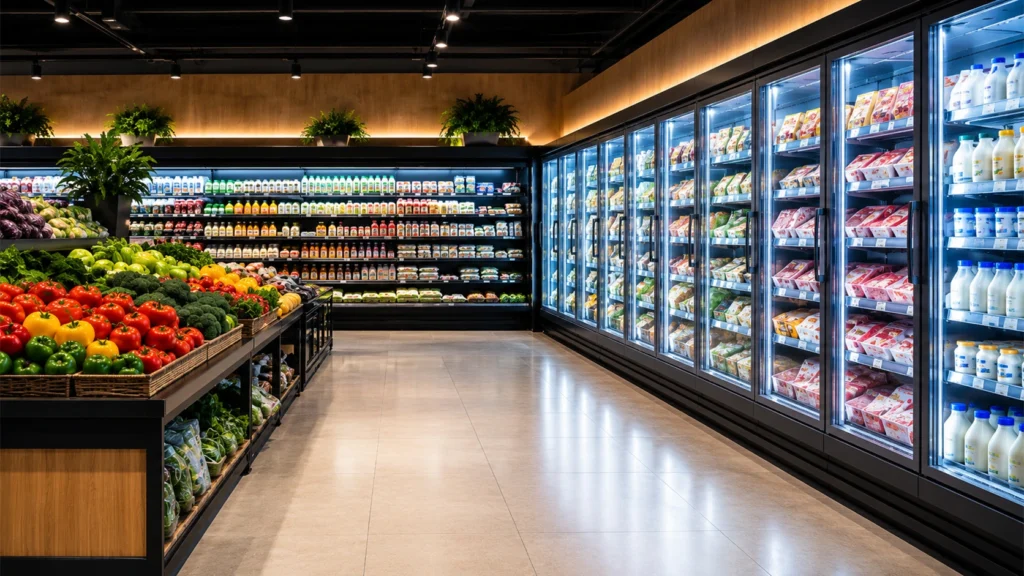
For grocery chains, temperature control is not just a daily task. It directly affects food safety, product quality, customer trust, and business loss. A small temperature change in a freezer, walk-in cooler, dairy case, meat section, or display refrigerator can create serious problems if it is not noticed on time.
Supermarkets handle many temperature-sensitive products every day, including frozen foods, dairy items, meat, seafood, fresh produce, ready-to-eat meals, and beverages. When stores depend only on manual checks, it becomes difficult to track every area all the time, especially during busy hours, overnight, or across multiple store locations.
This is where a supermarket temperature monitoring system becomes useful. It helps grocery chains track storage conditions in real time, receive alerts when temperatures go out of range, and maintain digital records for audits and internal checks.
What Is a Supermarket Temperature Monitoring System?
A supermarket temperature monitoring system is a setup that uses sensors, probes, gateways, and software to monitor temperatures in different areas of a store. These systems can track refrigerators, freezers, walk-in coolers, cold rooms, display cases, and food preparation areas.
Instead of staff checking temperatures manually and writing them on paper, the system records readings automatically. If the temperature goes above or below the safe range, the team can receive an alert by email, SMS, app notification, or dashboard.
For grocery chains with multiple locations, this type of system is even more helpful. Managers and food safety teams can view all store locations from one place and quickly identify which site or equipment needs attention.
Why Temperature Monitoring Matters for Grocery Chains
Grocery stores depend on proper refrigeration to protect products. If a freezer fails overnight or a cooler door is left open, products can become unsafe or unsellable. This can lead to food waste, customer complaints, failed inspections, and financial loss.
Temperature monitoring helps grocery chains reduce these risks by giving clear visibility into storage conditions. It also helps teams act faster instead of finding the problem after damage is already done.
A good monitoring system supports:
- Better food safety
- Lower product loss
- Faster response to equipment issues
- Fewer missed temperature checks
- Better audit preparation
- More control across multiple stores
For growing supermarket chains, Grocery Stores Temperature Monitoring Systems can also help create a standard process across all branches. This makes it easier for every store to follow the same food safety practices.
Areas Supermarkets Should Monitor
A grocery store has many areas where temperature control is important. Each area may have different temperature needs depending on the type of product stored there.
Common areas to monitor include:
- Walk-in coolers: Used for storing dairy, produce, beverages, prepared foods, and other chilled items.
- Walk-in freezers: Used for frozen food, ice cream, frozen meat, seafood, and backup frozen inventory.
- Dairy cases: Milk, cheese, yogurt, and other dairy products need consistent cold storage.
- Meat and seafood cases: These products are highly sensitive and need close temperature control.
- Frozen food aisles: Freezer cases must stay within safe limits to protect product quality.
- Refrigerated display cases: These are used for drinks, ready-to-eat meals, salads, sandwiches, and packaged fresh foods.
- Deli and prepared food sections: Hot and cold food holding areas need regular monitoring.
- Produce coolers: Some produce items need controlled temperature and humidity to maintain freshness.
- Receiving areas: Products can be exposed to unsafe conditions during loading and unloading if not handled properly.
By monitoring these areas, grocery chains can reduce blind spots and improve store-level food safety.
Manual Logs vs Digital Temperature Logs
Many supermarkets still use manual temperature logs. Staff check the temperature at fixed times and write the reading on a paper sheet. While this method is simple, it has many limitations.
Manual logs can be missed during rush hours. Handwriting may be unclear. Records can be lost or damaged. Most importantly, manual checks cannot show what happened between two readings. If a freezer fails at midnight and the next check happens in the morning, the issue may be discovered too late.
Digital temperature logs solve many of these problems. They record readings automatically and create a clear history of storage conditions. This helps teams see trends, identify repeated issues, and prepare reports when needed.
For grocery chains, digital logs are especially useful because they help maintain consistency across many locations. Instead of collecting paper sheets from every store, managers can review records from a central dashboard.
Real-Time Alerts Help Prevent Product Loss
One of the biggest benefits of a supermarket temperature monitoring system is real-time alerts. These alerts notify the right team when something goes wrong.
For example, an alert can be sent when:
- A freezer temperature rises above the safe range
- A refrigerator becomes too cold
- A walk-in cooler door is left open
- A sensor stops sending data
- A location loses power
- The temperature stays out of range for too long
Fast alerts help staff take quick action. They can close the door, move products, check the equipment, or call maintenance before the loss becomes serious.
This is important because many refrigeration issues happen outside normal working hours. Real-time alerts help grocery teams respond even when the store is closed or when managers are not physically present.
Multi-Location Monitoring for Grocery Chains
A single grocery store can manage temperature checks with local staff, but grocery chains need a more organized system. When there are many branches, it becomes harder to know which store is following the process properly and which store has repeated issues.
A centralized dashboard helps solve this problem. Food safety managers, operations teams, and maintenance teams can view temperature data from all locations in one place.
This helps them answer important questions:
- Which store has frequent temperature alerts?
- Which freezer or cooler needs maintenance?
- Are all locations completing their monitoring properly?
- Are there repeated temperature issues in one department?
- Which stores are audit-ready?
This type of visibility helps grocery chains move from reactive work to proactive monitoring. Instead of waiting for complaints or inspection problems, teams can find and fix issues earlier.
How Temperature Monitoring Supports Food Safety
Food safety is one of the main reasons grocery stores need reliable temperature monitoring. Many food products must be stored within proper temperature ranges to stay safe and fresh.
If temperatures are not controlled, bacteria can grow faster, frozen products can thaw, and fresh products can lose quality. This creates risk for customers and the business.
Grocery Stores Temperature Monitoring Systems help teams maintain proper storage conditions and keep better records. These records can support internal reviews, inspections, and corrective actions.
A strong food safety process should include:
- Clear temperature limits for each area
- Automatic readings
- Real-time alerts
- Corrective action notes
- Digital reports
- Regular review of trends
- Staff training
Temperature monitoring is not only about technology. It is also about building a reliable process that store teams can follow every day.
How Plumsense Helps Supermarket Teams
Plumsense helps grocery chains monitor temperature-sensitive areas using wireless sensors, real-time alerts, digital logs, and easy-to-view reports. This helps supermarket teams reduce manual work and respond faster when storage conditions go out of range.
With Plumsense, teams can monitor areas such as walk-in coolers, freezers, refrigerated cases, and other important food storage zones. The system helps create better visibility across one store or many locations.
For multi-location grocery chains, Plumsense can support food safety teams, operations managers, and maintenance teams by giving them useful data in one place. This makes it easier to track issues, review records, and improve store performance over time.
Key Features to Look For in a Supermarket Temperature Monitoring System
Before choosing a system, grocery chains should look for features that support daily use and long-term food safety.
Important features include:
- Wireless sensors: These make installation easier and help monitor different store areas.
- Real-time alerts: Alerts help teams act quickly when temperatures go out of range.
- Central dashboard: A dashboard helps managers view all locations and equipment from one place.
- Digital logs: Automatic records reduce manual work and improve reporting.
- Corrective action tracking: Teams should be able to note what action was taken after an alert.
- Reports: Audit-friendly reports help during inspections and internal reviews.
- Easy setup: Store teams should be able to use the system without a complicated process.
- Scalable design: The system should support more locations as the grocery chain grows.
Common Mistakes Grocery Chains Should Avoid
Some supermarkets install sensors but do not use them properly. To get the best results, avoid these common mistakes:
- Monitoring only one area and ignoring display cases or backroom storage
- Setting alert limits without reviewing food safety needs
- Not assigning alert responsibility to the right staff
- Ignoring repeated alerts from the same equipment
- Not reviewing temperature trends
- Keeping digital logs but not using them for improvement
- Forgetting to train store teams
A monitoring system works best when it is part of a complete food safety process.
Final Checklist for Grocery Chains
Before setting up a supermarket temperature monitoring system, grocery chains should check these points:
- List all refrigerators, freezers, coolers, and display cases
- Set safe temperature ranges for each area
- Place sensors in the right locations
- Create alert rules for store and management teams
- Use digital logs instead of only paper records
- Review reports regularly
- Track corrective actions after alerts
- Compare performance across store locations
- Train staff on how to respond to alerts
By following this checklist, grocery chains can build a stronger and more reliable monitoring process.
Conclusion
A supermarket temperature monitoring system helps grocery chains protect food quality, reduce product loss, and maintain better control across multiple locations. It gives teams real-time visibility into coolers, freezers, display cases, walk-in storage, and other important areas.
For supermarkets, manual temperature checks are no longer enough. Digital monitoring makes it easier to track conditions, receive alerts, keep records, and prepare for audits.
Grocery stores temperature monitoring systems are especially useful for chains that want consistent food safety practices across all branches. With the right system and process, grocery teams can respond faster, reduce waste, and protect customer trust.
Plumsense supports this need with wireless monitoring, real-time alerts, digital logs, and centralized reporting for grocery and supermarket teams.