Meet Plumsense at IAAPA Expo 2026 · Booth W2282 · Orlando, FL · Nov 17–20, 2026
 Visit us at www.plumsense.com


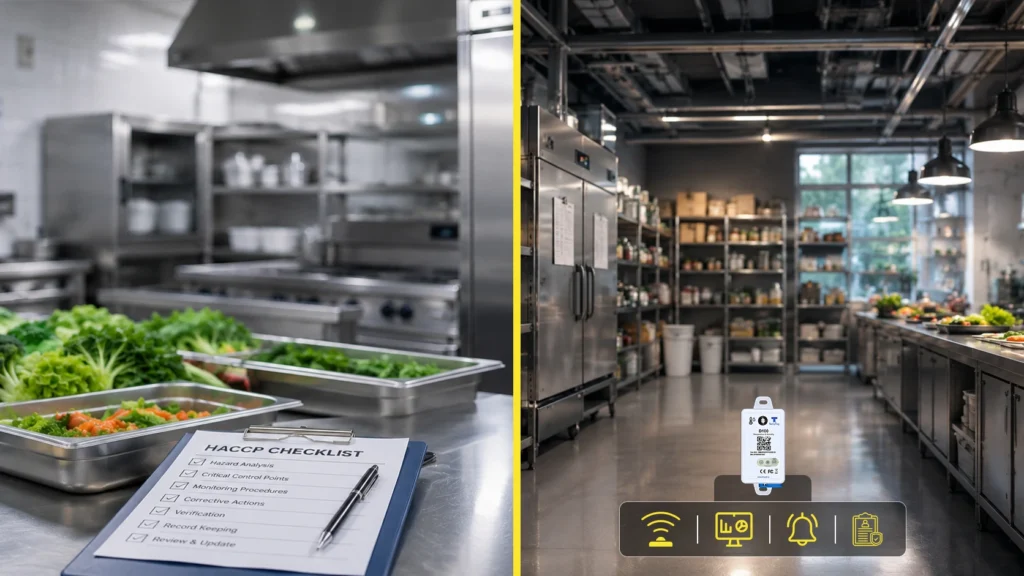
Food safety depends on keeping products at the right temperature during storage, preparation, transport, and service. When food remains outside a safe temperature range for too long, harmful bacteria can grow, product quality can decline, and businesses may face waste or compliance issues.
This is why temperature monitoring is an important part of every HACCP food safety program. Restaurants, grocery stores, commercial kitchens, food manufacturers, and cold storage facilities all need reliable temperature records.
However, many businesses still depend on manual checks, paper logs, and delayed reporting. These methods may look simple, but they can create gaps in monitoring and make it harder to respond when something goes wrong.
IoT temperature monitoring can help improve this process. Wireless sensors, automatic records, and real-time alerts can give teams better visibility and help them act faster.
Below are five common HACCP temperature monitoring mistakes and how IoT can help reduce them.
Why HACCP Temperature Monitoring Matters
HACCP stands for Hazard Analysis and Critical Control Points. It is a food safety system used to identify, monitor, and control risks that may affect food safety.
Temperature is often one of the most important control points.
Food may need to remain within a specific temperature range during:
- Refrigerated storage
- Frozen storage
- Cooking
- Cooling
- Hot holding
- Transport
- Delivery
If teams do not monitor these stages properly, food can move outside the required range without anyone noticing.
A reliable monitoring system helps businesses track food storage conditions, maintain clear records, and respond before a temperature issue becomes more serious.
1. Relying Only on Scheduled Manual Checks
One of the most common mistakes is depending only on employees to check temperatures at set times.
For example, a staff member may record refrigerator temperatures in the morning and again at the end of the day. This gives two readings, but it does not show what happened between those checks.
A refrigerator could become too warm for several hours and then return to normal before the next reading. The paper log may show a normal temperature even though a serious issue happened earlier.
Manual checks can also be missed during busy periods. In restaurants and commercial kitchens, staff often focus on customers, food preparation, deliveries, and cleaning. Temperature checks may be delayed or forgotten.
How IoT Can Help
IoT temperature sensors can monitor equipment continuously. Instead of checking only once or twice a day, the system can collect readings at regular intervals.
This gives teams a more complete view of storage conditions.
Continuous monitoring can help identify:
- Sudden temperature changes
- Slow equipment failure
- Doors left open
- Power problems
- Cooling system issues
A restaurant temperature monitoring system can help kitchen teams reduce missed checks and track refrigerated equipment more consistently.
Plumsense helps food businesses monitor storage conditions continuously, reducing the gaps between scheduled manual checks.
Manual checks may still be useful for some tasks, but automatic monitoring provides extra support between scheduled inspections.
2. Keeping Incomplete or Inaccurate Records
Paper temperature logs can create several problems.
Employees may forget to enter readings, write unclear numbers, use the wrong time, or record information after the check instead of during it.
Paper sheets can also be lost, damaged, or stored in different locations.
When an inspection or internal review happens, managers may need to search through folders to find the right records. If information is missing, it may be difficult to show that food was stored safely.
Another issue is that paper logs do not always show whether a reading was taken at the correct time. A completed sheet does not always mean the process was followed properly.
How IoT Can Help
An automated HACCP temperature monitoring system can create digital records without requiring staff to write down every reading.
The system can save information such as:
- Date
- Time
- Temperature
- Sensor location
- Equipment name
- Alert history
Digital records are easier to review, organize, and access during internal reviews, food safety audits, and inspections.
Businesses can also use temperature and humidity data loggers to track changing conditions and maintain clearer records over time.
A digital system does not remove the need for good staff training, but it can reduce common recording errors and create more reliable data.
This is especially useful for businesses with many refrigerators, freezers, storage rooms, or locations.
3. Responding Too Late to Temperature Problems
Another common mistake is discovering a temperature problem after it has already caused damage.
For example, a freezer may fail overnight. Staff may not notice until the next morning, by which time food may have been exposed to unsafe conditions for several hours.
Even if the problem happens during working hours, it may not be noticed quickly if no one is watching the equipment.
Delayed action can lead to:
- Food waste
- Product loss
- Customer safety risks
- Extra inspection work
- Equipment repair costs
- Compliance concerns
How IoT Can Help
Real-time temperature alerts can notify staff when conditions move outside the expected range.
Alerts may be sent through:
- Text message
- Mobile notification
- Dashboard notification
This gives teams a chance to respond sooner.
For example, staff may be able to:
- Check whether a door is open
- Move food to another refrigerator
- Contact maintenance
- Check the power supply
- Review recent temperature history
A wireless IoT temperature monitoring system can collect readings automatically and help teams review conditions remotely.
Plumsense supports real-time monitoring and alerts so teams can act before a small temperature issue becomes a larger problem.
It is important to set alert limits carefully. If limits are too narrow, teams may receive too many alerts. If they are too wide, important problems may be missed.
The settings should match the food type, equipment, and HACCP plan.
4. Monitoring Equipment but Ignoring the Full Process
Some businesses monitor refrigerators and freezers, but do not track other important parts of the food process.
HACCP temperature monitoring may also be needed during:
- Receiving
- Cooking
- Cooling
- Reheating
- Hot holding
- Transport
- Display
A product may be stored safely but still become unsafe during cooling or delivery.
For example, cooked food may take too long to cool. A delivery vehicle may become too warm. Hot food may remain below the required holding temperature.
Monitoring only one stage can leave gaps in the food safety process.
How IoT Can Help
IoT monitoring can support a wider HACCP program by collecting data from different areas and equipment.
Wireless temperature sensors can be placed in:
- Walk-in coolers
- Freezers
- Refrigerated display cases
- Cold rooms
- Storage areas
- Delivery vehicles
Digital probes and connected devices can also help staff record temperatures during cooking, cooling, and receiving.
A connected system can bring this information into one place.
This makes it easier for managers to review the full process instead of checking each area separately.
The goal is not to install sensors everywhere without a plan. Businesses should first identify their critical control points and then select the appropriate monitoring method for each.
5. Managing Every Location Separately
Multi-location businesses often face another challenge: each site manages its own temperature records.
One restaurant may follow the process correctly, while another location may miss checks or respond slowly to alerts.
Managers may receive reports in different formats, making it difficult to compare performance across the business.
Separate systems can also make it harder to identify repeated issues.
For example, several locations may be experiencing similar refrigerator problems, but management may not notice the pattern because the data is stored separately.
How IoT Can Help
A cloud-based monitoring platform can give managers visibility across all locations from one account.
Instead of reviewing separate paper logs or spreadsheets, teams can access readings, alerts, and reports from a single platform.
This makes it easier to compare performance, identify trends, and apply consistent processes across every site.
Before choosing a monitoring system, businesses should consider:
- How many refrigerators, freezers, and storage areas need monitoring?
- Do you manage one location or several locations?
- How often should readings be recorded?
- Who should receive alerts?
- What reports are needed?
- Does the system support remote access?
- Can it work during internet or power problems?
- How are sensors calibrated?
- Is the system easy for staff to use?
The best solution is one that fits the business’s daily workflow. It should provide dependable readings, clear alerts, accessible records, and reports that staff can easily understand and use.
Final Thoughts
Common HACCP monitoring mistakes include relying only on manual checks, maintaining incomplete records, responding too slowly, overlooking parts of the food process, and managing each location separately.
IoT monitoring can help businesses maintain continuous records, receive timely alerts, and improve visibility across equipment and locations. However, technology works best when supported by trained staff, calibrated equipment, and clear corrective-action procedures.
Plumsense offers IoT temperature monitoring solutions that help food businesses protect products, simplify recordkeeping, and respond more quickly when conditions change.