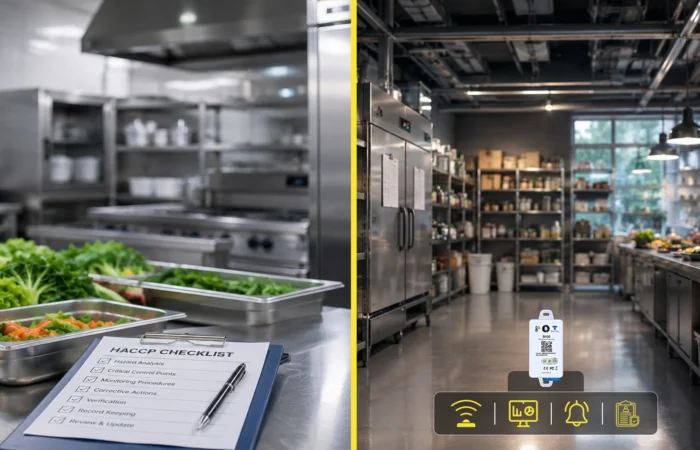
Temperature control is important in both food safety and healthcare. Restaurants, food storage facilities, hospitals, clinics, pharmacies, and labs all handle products that can be damaged when the temperature goes out of range.
A small temperature change can lead to food spoilage, unsafe storage, product loss, or compliance problems. This is why many businesses are moving from manual temperature checks to a wireless IoT temperature monitoring system.
A wireless IoT system helps monitor temperature in real time. It uses smart sensors to collect temperature data and send it to a cloud-based dashboard. If the temperature goes above or below the safe range, the system can send alerts so your team can take action quickly.
For food and healthcare businesses, this is not just a technology upgrade. It is a better way to protect products, save time, reduce risk, and keep useful records.
Brands like Plumsense help businesses monitor temperature-sensitive areas with wireless sensors, real-time alerts, and easy-to-access data.
What Is a Wireless IoT Temperature Monitoring System?
A wireless IoT temperature monitoring system is a smart monitoring solution that tracks temperature without manual checks. It uses wireless sensors to measure temperature and send the data to a dashboard or software platform.
The system can be used in refrigerators, freezers, cold rooms, storage areas, medicine refrigerators, vaccine storage units, and other temperature-sensitive spaces.
In simple words, the system helps you answer three important questions:
- Is the temperature safe right now?
- Was the temperature safe earlier?
- Did anyone get an alert when something went wrong?
This makes it useful for food businesses, restaurants, hospitals, clinics, pharmacies, labs, and warehouses.
Manual Temperature Checks vs Wireless IoT Monitoring
| Manual Temperature Checks |
Wireless IoT Temperature Monitoring System |
| Staff check temperature by hand |
Sensors check temperature automatically |
| Readings may be missed during busy hours |
Data is recorded continuously |
| Paper logs can be hard to manage |
Digital records are easy to access |
| Problems may be found late |
Alerts are sent in real time |
| Hard to monitor multiple locations |
Multiple areas can be viewed from one dashboard |
| More manual work for staff |
Less manual work and fewer errors |
1. Real-Time Temperature Tracking
The biggest benefit of a wireless IoT temperature monitoring system is real-time tracking.
Instead of waiting for staff to check temperatures manually, wireless sensors monitor conditions throughout the day and night. This is helpful for restaurants, hospitals, clinics, and storage facilities where temperature-sensitive products need constant protection.
For example, if a walk-in cooler in a restaurant starts warming up after closing hours, the system can detect the issue. The manager can receive an alert and take action before the food is spoiled.
In healthcare, real-time tracking is also important. Medicines, vaccines, and lab samples need stable storage conditions. Real-time monitoring helps healthcare teams know when there is a problem instead of finding it too late.
2. Instant Alerts When Temperature Goes Out of Range
Temperature problems can happen at any time. A refrigerator door may be left open. A freezer may stop working. A power issue may affect storage equipment.
With manual checks, your team may not notice the problem until the next scheduled reading. But with wireless IoT monitoring, alerts can be sent as soon as the temperature goes outside the safe range.
Alerts can help your team respond faster through SMS, email, or app notifications.
This is useful for both food safety and healthcare temperature monitoring. Fast alerts can help prevent food waste, protect medicines, and reduce the chance of product loss.
3. Better Food Safety
Food safety depends on proper temperature control. Food stored at unsafe temperatures can spoil faster and may become unsafe for customers.
Food Safety Temperature Monitoring Systems help restaurants, commercial kitchens, cold storage facilities, and foodservice businesses keep food at safe temperatures.
A wireless system can monitor:
- Refrigerators
- Freezers
- Walk-in coolers
- Cold storage rooms
- Prep areas
- Food holding areas
For restaurants, a restaurant temperature monitoring system helps staff manage daily food safety more easily. It reduces the need for paper logs and helps teams respond quickly when storage temperatures change.
Better temperature control means better food quality, lower waste, and safer operations.
4. Safer Healthcare Storage
Healthcare facilities handle many products that must be stored carefully. These may include vaccines, medicines, blood products, test samples, and lab materials.
If these items are exposed to the wrong temperature, they may lose quality or become unsafe to use.
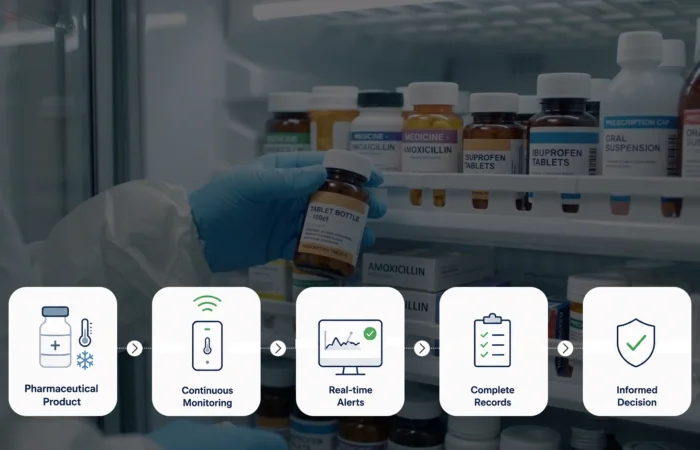
This is why temperature monitoring systems for hospitals are important. They help healthcare teams monitor storage areas continuously and keep records for internal review and audits.
Wireless monitoring is useful for:
- Hospital refrigerators
- Vaccine storage
- Pharmacy storage
- Blood banks
- Laboratories
- Clinics
- Medical storage rooms
Good healthcare temperature monitoring helps protect patient safety and reduces the risk of product damage.
5. Less Manual Work for Staff
Manual temperature checks take time. Staff need to check each unit, write down the reading, and keep records. During busy hours, this task can be delayed or missed.
In restaurants, staff may be busy with food prep, cleaning, serving customers, and handling orders. In hospitals, staff are focused on patient care and daily medical work.
A wireless IoT system reduces this manual burden. The sensors collect data automatically and store it in the system.
This helps teams save time and reduce errors. Staff can focus on their main work while the system continues monitoring in the background.
6. Better Records for Audits and Inspections
Many food and healthcare businesses need clear temperature records. These records may be needed during inspections, audits, internal reviews, or quality checks.
Paper logs can be difficult to manage. They may be incomplete, damaged, or hard to search. Sometimes readings are written incorrectly or filled in late.
A wireless IoT temperature monitoring system stores records digitally. This makes it easier to review past data, download reports, and show proof that temperatures were monitored.
Plumsense monitoring solutions can help businesses keep better temperature records and access important data when needed.
Good records support better accountability and make audits easier to handle.
7. Helps Prevent Product Loss
Temperature issues can lead to costly product loss.
For food businesses, this may include spoiled meat, seafood, dairy, frozen food, or prepared meals. For healthcare facilities, this may include damaged vaccines, medicines, or lab samples.
A wireless IoT system helps prevent loss by giving early warning signs. If a storage unit starts to fail, your team can act before the products are damaged.
This can save money and reduce stress for managers. In many cases, preventing even one major loss can make the monitoring system worth the investment.
8. Remote Monitoring from Anywhere
One of the best features of wireless IoT monitoring is remote access.
Managers do not need to be physically present to check temperatures. They can view temperature data from a phone, tablet, or computer.
This is very helpful for businesses with multiple locations.
For example, a restaurant owner can check temperatures across different branches. A healthcare manager can review vaccine storage conditions across clinics. A food storage business can monitor cold rooms from one dashboard.
Remote access gives better control and faster decision-making.
9. Better Control for Multiple Locations
Managing temperature across multiple sites can be difficult. Each location may have different refrigerators, freezers, storage areas, and staff members.
A wireless IoT system makes multi-location monitoring easier. It gives a central view of temperature data from different areas.
This helps managers quickly see which location is safe and which one needs attention.
For growing food businesses and healthcare groups, this is a major benefit. It helps create the same monitoring process across all locations.
Plumsense can support businesses that need real-time visibility across different storage areas and facilities.
10. Supports Better Compliance and Decision-Making
Food and healthcare businesses often need to follow safety rules and storage guidelines. While requirements may be different for each industry, the goal is the same: keep products safe and maintain proper records.
Wireless IoT monitoring supports compliance by helping businesses track temperature, receive alerts, and store records.
It also helps managers make better decisions.
For example, if one freezer goes out of range often, the data can show a pattern. The team can repair or replace the unit before a bigger issue happens.
Temperature data can also help with maintenance planning, staff training, and storage improvements.
Where Can You Use Wireless IoT Temperature Monitoring?
A wireless IoT temperature monitoring system can be used in many places, including:
- Restaurants
- Commercial kitchens
- Walk-in coolers
- Cold storage rooms
- Food warehouses
- Hospitals
- Clinics
- Pharmacies
- Labs
- Vaccine storage areas
- Blood banks
- Supply chain and logistics operations
Any business that stores temperature-sensitive products can benefit from smart monitoring.
How Plumsense Helps Temperature Monitoring Systems
Plumsense provides wireless monitoring solutions for businesses that need reliable temperature tracking.
With Plumsense, teams can monitor temperature-sensitive areas, receive alerts, and access data from one platform. This helps reduce manual work, improve visibility, and protect valuable products.
The goal is to make temperature monitoring easier, faster, and more reliable
Conclusion
A wireless IoT temperature monitoring system is a smart choice for food safety and healthcare. It helps businesses monitor temperature in real time, receive alerts, reduce manual work, and keep better records.
For restaurants and food businesses, it helps protect food quality, reduce waste, and support safer operations. For hospitals, clinics, pharmacies, and labs, it helps protect vaccines, medicines, samples, and other sensitive products.
With a reliable solution like Plumsense, businesses can manage temperature monitoring more easily and respond faster when problems happen.



 Meet
us
at NACAS C3X 2026 · Booth 120 · Chicago · Sep 27–30, 2026
Meet
us
at NACAS C3X 2026 · Booth 120 · Chicago · Sep 27–30, 2026
 See continuous monitoring live at Booth 120 · Book a 15-minute demo
 Visit
us at www.plumsense.com
Visit
us at www.plumsense.com