Running a small clinic is not easy. Every day, clinic staff manage patients, medicines, vaccines, lab samples, and medical supplies while trying to maintain safe and smooth operations. In the middle of all this, one important thing is often overlooked: proper temperature monitoring.
Many medicines, vaccines, and healthcare products must stay within a specific temperature range to remain safe and effective. Even a small temperature change can damage them. This can lead to product loss, compliance issues, and patient safety risks. That’s why temperature monitoring for clinics is becoming an important part of modern healthcare operations.
We will explain why temperature monitoring matters, common mistakes clinics make, what features to look for, and how modern monitoring systems help improve safety and compliance.
Why Temperature Monitoring Matters in Small Clinics
Small clinics may not have the same storage capacity as large hospitals, but they still store temperature-sensitive medical products every day.
These include:
- Vaccines
- Insulin
- Blood samples
- Test kits
- Biologics
- Medicines
- Laboratory supplies
Many of these products can lose effectiveness if exposed to temperatures outside the recommended range.
For example, a vaccine may still look normal after temperature exposure, but it may no longer provide proper protection for patients.
This is why healthcare temperature monitoring systems are important for clinics of all sizes.
Proper monitoring helps clinics:
- Protect medical inventory
- Reduce product waste
- Maintain compliance
- Improve patient safety
- Avoid financial losses
Common Areas That Need Temperature Monitoring System
| Clinic Area | What Needs Monitoring | Why It Matters |
| Vaccine Refrigerators | Temperature between 2°C and 8°C | Helps protect vaccine safety and effectiveness |
| Medical Freezers | Frozen storage below -20°C | Helps prevent sample or medicine damage |
| Storage Rooms | Temperature and humidity | Helps protect medical supplies and packaging |
| Laboratories | Environmental conditions | Helps keep sensitive samples safe |
| Pharmacy Areas | Medicine storage temperature | Helps reduce spoilage and compliance issues |
Benefits of Automated Temperature Monitoring
An automated healthcare temperature monitoring system helps clinics improve safety, efficiency, and compliance all at once.
- 24/7 Monitoring: Wireless sensors continuously track temperature and humidity even at 3 AM on Sunday when no one is there. You get complete visibility into your storage conditions every single day.
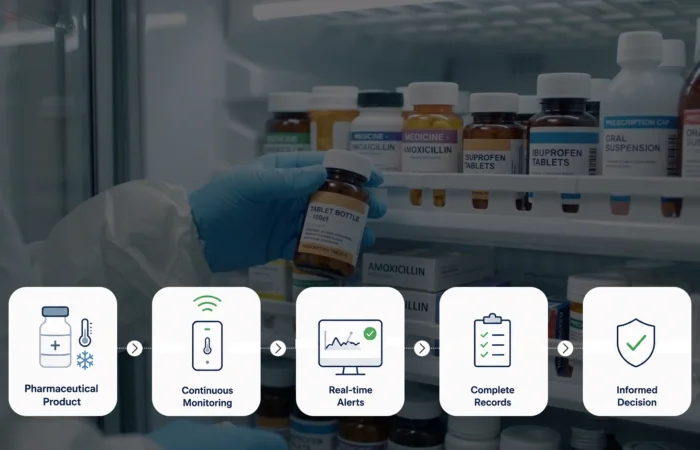
- Instant Alerts: If temperatures go outside the safe range, staff receive alerts through SMS, email, or mobile app notifications. Your team can act quickly before products are damaged.
- Easy Record Keeping: Cloud-based systems automatically store temperature records for audits and inspections. Instead of hunting through filing cabinets, you have organized digital records ready for regulators.
- Reduced Manual Work: Automation saves staff time by removing paper-based logging processes. Your team can focus on patient care instead of writing down temperatures.
- Better Compliance: Digital records help clinics meet CDC, FDA, and healthcare storage guidelines. When an inspector asks about your temperature history, you can pull up detailed reports in seconds.
What Features Should Small Clinics Look For?
Choosing the right clinic temperature monitoring solution is important. Focus on practical features instead of overly complex systems.
| Feature | Why Small Clinics Need It |
| Wireless Sensors | Easy to install without wiring |
| Real-Time Alerts | Helps staff respond quickly to unsafe temperatures |
| Cloud Dashboard | Allows remote access from any device |
| Automatic Data Logging | Keeps records ready for audits |
| Battery Backup | Helps during power issues |
| Easy Installation | Saves time and avoids complex setup |
Many clinics also prefer Products Made in USA because they offer dependable quality, responsive support, and faster service availability. When something goes wrong, you want help quickly.
Solutions from trusted providers like Plumsense help clinics simplify monitoring while improving visibility across healthcare storage areas. Plumsense offers Products Made in the USA that provide the reliability small clinics depend on.
How IoT Temperature Monitoring Helps Clinics
Many clinics are now using IoT temperature monitoring systems for better visibility and automation.
IoT technology allows wireless sensors to send real-time data directly to cloud software.
Benefits include:
- Live monitoring
- Faster alerts
- Better reporting
- Remote access
- Reduced paperwork
Small clinics can use IoT systems without needing a large IT team.
Why Remote Monitoring Is Critical
Clinic managers are not always on-site. Remote temperature monitoring systems allow you to:
- Check readings from anywhere
- Receive mobile alerts instantly
- Review historical data
- Monitor multiple locations at once
This is especially helpful for clinics with multiple refrigerators, satellite locations, or weekend closures. You don’t have to physically visit your clinic to know everything is fine.
Why Data Logging Is Important
Many healthcare inspections require proof that products were stored correctly over time.
A temperature data logger automatically records:
- Temperature readings
- Humidity levels
- Alert history
- Sensor activity
This helps clinics:
- Maintain accurate records
- Identify recurring issues
- Improve operational visibility
- Reduce manual paperwork
Digital reporting is much easier compared to paper logs.
How IoT Technology Helps Small Clinics
Modern clinics are increasingly using IoT temperature monitoring systems for better visibility and automation. IoT technology allows sensors to send data directly to cloud software in real time.
Benefits include live monitoring with no delays, faster alerts with immediate notification, better reporting with detailed analytics, remote access from anywhere, and reduced manual work. Small clinics can use IoT solutions without needing large IT teams; the systems are designed to be simple.
How Plumsense Supports Small Clinics
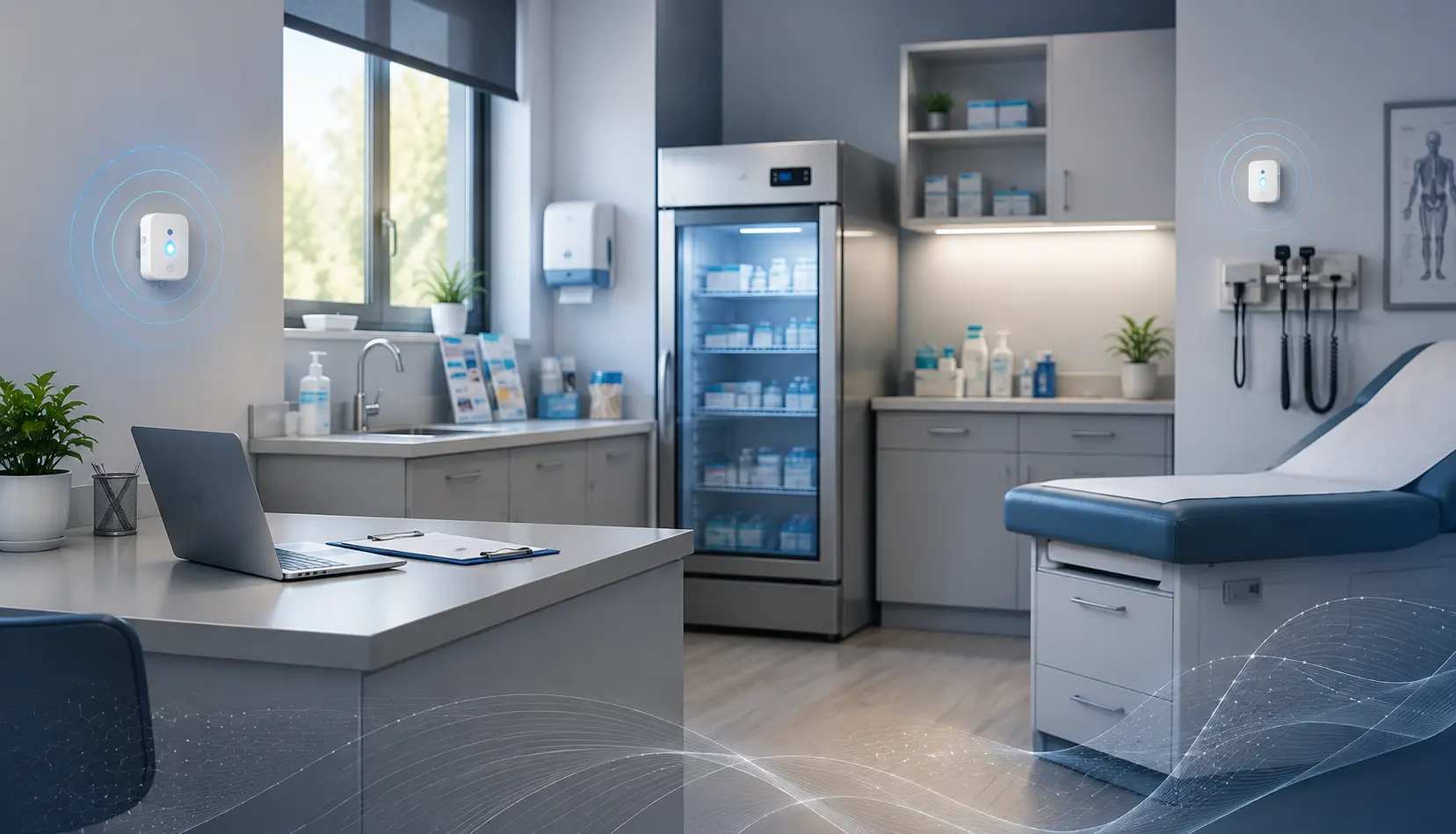
Plumsense provides smart temperature and humidity monitoring solutions designed specifically for healthcare environments. Their systems help clinics monitor vaccine refrigerators, medical freezers, storage rooms, and laboratories.
With cloud access, real-time alerts, and wireless sensors, clinics improve visibility while reducing manual work. Many healthcare providers prefer Products Made in the USA for reliability and long-term support. Plumsense offers monitoring solutions that support healthcare compliance while keeping systems easy to use.
For growing clinics, scalable monitoring solutions help support future expansion without increasing complexity. As your clinic grows, your monitoring system grows with you.
Best Practices for Small Clinic Temperature Monitoring
Even with a monitoring system, clinics should follow good storage practices.
- Use Continuous Monitoring: Avoid relying only on manual temperature checks.
- Set Alert Thresholds: Configure alerts for high and low temperatures.
- Monitor Backup Storage Units: Backup refrigerators should also be monitored.
- Review Reports Regularly: Regular reviews help identify recurring problems early.
- Train Staff Properly: Employees should understand proper storage procedures and alert response steps.
- Test Alert Systems: Make sure alerts are working correctly.
Benefits of Cloud-Based Monitoring Systems
Cloud monitoring systems are becoming more popular in healthcare because they simplify operations.
Benefits include:
- Centralized monitoring
- Multi-location visibility
- Secure record storage
- Easy reporting access
- Reduced paperwork
Cloud-connected temperature monitoring systems for healthcare facilities also help clinic managers monitor operations remotely.
Why Small Clinics Are Moving Away From Manual Logs
Paper-based monitoring creates extra work and increases the risk of missing critical temperature events.
Automated monitoring helps clinics:
- Save staff time
- Improve accuracy
- Simplify audits
- Reduce paperwork
- Receive instant alerts
- Maintain continuous records
This is why many healthcare providers are moving toward digital healthcare monitoring solutions.
Conclusion
Temperature monitoring is no longer just an extra safety step for small clinics. It has become an important part of protecting vaccines, medicines, lab samples, and patient care. Even a small temperature change can lead to damaged products, financial loss, and compliance issues.
Modern healthcare temperature monitoring systems help clinics maintain safe storage conditions with real-time alerts, wireless sensors, cloud reporting, and automatic data logging. These systems reduce manual work while improving visibility and compliance.
As more clinics move away from paper logs, smart monitoring solutions are becoming the better choice for reliable healthcare storage management. Solutions from trusted providers like Plumsense help small clinics improve operational efficiency while protecting temperature-sensitive medical products every day.
Many healthcare providers also prefer Products Made in the USA because they value dependable quality, support, and long-term performance.


 Meet
us
at NACAS C3X 2026 · Booth 120 · Chicago · Sep 27–30, 2026
Meet
us
at NACAS C3X 2026 · Booth 120 · Chicago · Sep 27–30, 2026
 See continuous monitoring live at Booth 120 · Book a 15-minute demo
 Visit
us at www.plumsense.com
Visit
us at www.plumsense.com