Meet Plumsense at IAAPA Expo 2026 · Booth W2282 · Orlando, FL · Nov 17–20, 2026
 Visit us at www.plumsense.com


Overview
For pharmacies, vaccine storage is not only about keeping products cold. It is also about proving that every vaccine was stored safely from the time it arrived until the time it was used.
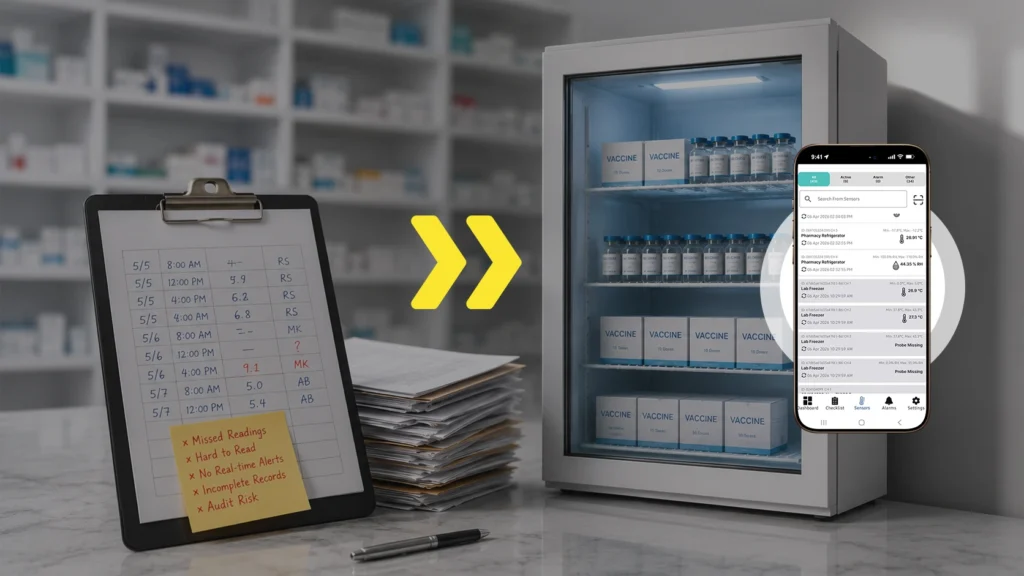
One pharmacy chain was still using manual temperature logs for its vaccine refrigerators and freezers. Staff checked the temperature, wrote it on a sheet, and kept the paper records in a folder. On normal days, this seemed simple enough.
But during audits, this process created problems.
The records were not always complete. Some readings were missed during busy hours. Some handwriting was hard to read. In a few cases, staff could not clearly explain what happened when temperatures went outside the expected range.
The chain realized that manual logging was becoming a risk. They needed a better vaccine temperature monitoring process to track storage conditions, reduce missed records, and simplify audit preparation.
The Challenge
The pharmacy chain had multiple locations. Each store had vaccine refrigerators and freezers that needed regular monitoring.
Their team followed a basic process:
- Staff checked temperatures manually
- Readings were written on paper logs
- Logs were reviewed at the end of the day or week
- Managers collected records when needed for audits
The problem was that this process depended too much on staff availability and memory.
During busy pharmacy hours, employees were focused on patients, prescriptions, calls, inventory, and daily store work. Temperature checks were important, but they were easy to delay or forget when the team was under pressure.
This created gaps in the records.
When an auditor asked for temperature history, the team could show paper logs, but the records were not always clean. Some days had missing entries. Some readings were written late. Some notes did not explain what action was taken after a temperature issue.
For vaccine storage, this can create serious concern. A better pharmacy temperature monitoring process can help reduce these issues and make daily record-keeping more reliable.
Why Manual Logs Failed During Audits
Manual logs failed the pharmacy audit process for a few clear reasons.
1. Missed Readings
The biggest issue was missed readings. Staff were expected to check vaccine storage units at set times, but the pharmacy environment was often too busy.
Even one missed entry could raise questions during an audit.
2. Hard-to-Read Records
Paper logs were not always easy to read. Different staff members used different writing styles. Some numbers were unclear. In some cases, it was hard to know whether a reading was written correctly.
This made the record review slow and stressful.
3. No Real-Time Warning
Manual logs only showed the temperature when someone checked it. If a refrigerator had a problem between two checks, the team might not notice it quickly.
This meant vaccines could be exposed to unsafe temperatures before anyone responded.
4. Weak Documentation
When a temperature issue happened, staff sometimes wrote a short note, but the details were not always enough.
For example, the record might show that the temperature was high, but not clearly show when the issue started, who responded, what action was taken, and when the storage unit returned to the correct range.
During audits, this lack of detail made the process harder.
5. Too Much Pressure on Staff
Manual logging added more work to already busy pharmacy teams. The staff had to remember checks, write records, report issues, and keep files ready.
The chain wanted a process that supported staff instead of depending fully on them.
The Solution
The pharmacy chain decided to move away from paper-based temperature logging and improve its monitoring process.
They started using Plumsense to help track vaccine refrigerator and freezer conditions more consistently.
The goal was not only to collect temperature data. The goal was to create a better daily workflow.
The new process helped the team:
- Monitor storage conditions more regularly
- Reduce missed temperature records
- Get alerts when readings need attention
- Keep digital records for review
- Make audit preparation easier
Instead of relying only on paper sheets, the team had a vaccine storage monitoring system that supported daily checks and record keeping.
How the Workflow Changed
Before the change, each location had to manage its own paper logs. Managers had to remind staff, check forms, and follow up when entries were missing.
After the change, the workflow became more organized.
Temperature readings were easier to review. Staff could respond faster when there was a storage concern. Managers had better visibility across locations. Records were easier to collect when audit time came.
The team also became more confident because they had clearer information.
If a temperature issue happened, they could review the data and understand what took place. This made it easier to explain the situation and show what action was taken.
The Results
The pharmacy chain saw improvement in several areas.
Better Record Quality
The team no longer had to depend only on handwritten logs. Digital temperature logs helped reduce unclear entries and missing information.
This made the documentation easier to review.
Faster Response to Issues
With alerts in place, staff could respond sooner when storage conditions moved outside the expected range.
This helped reduce the risk of unnoticed temperature problems.
Easier Audit Preparation
Audit preparation became less stressful. Instead of searching through paper folders, managers could access cleaner records and review temperature history more easily.
This saved time and reduced confusion.
More Consistent Process Across Locations
Because the pharmacy chain had multiple stores, consistency was important. The new monitoring setup helped each location follow a more reliable process.
This made it easier for leadership to manage vaccine storage across the chain.
Key Takeaway
Manual vaccine temperature logs can work for very small operations, but they often become difficult to manage as pharmacy work gets busier or as the number of locations grows.
The main problem is not that the staff do not care. The problem is that manual logging depends on people remembering every check, writing every detail clearly, and responding quickly every time.
That is hard to maintain every day.
By using Plumsense, the pharmacy chain improved its vaccine temperature monitoring workflow, reduced gaps in records, and made audit preparation easier.
For pharmacies that still depend on paper logs, this case study shows a clear lesson: better monitoring is not only about technology. It is about creating a process that helps staff protect vaccines and stay ready for audits.
Need Better Vaccine Temperature Records?
If your pharmacy team is still using paper logs, it may be time to review your current process. Plumsense can help pharmacies improve vaccine temperature monitoring, reduce missed records, and make documentation easier to review during audits.
Contact Plumsense to learn how your pharmacy can improve vaccine storage monitoring and audit readiness.