Meet Plumsense at IAAPA Expo 2026 · Booth W2282 · Orlando, FL · Nov 17–20, 2026
 Visit us at www.plumsense.com


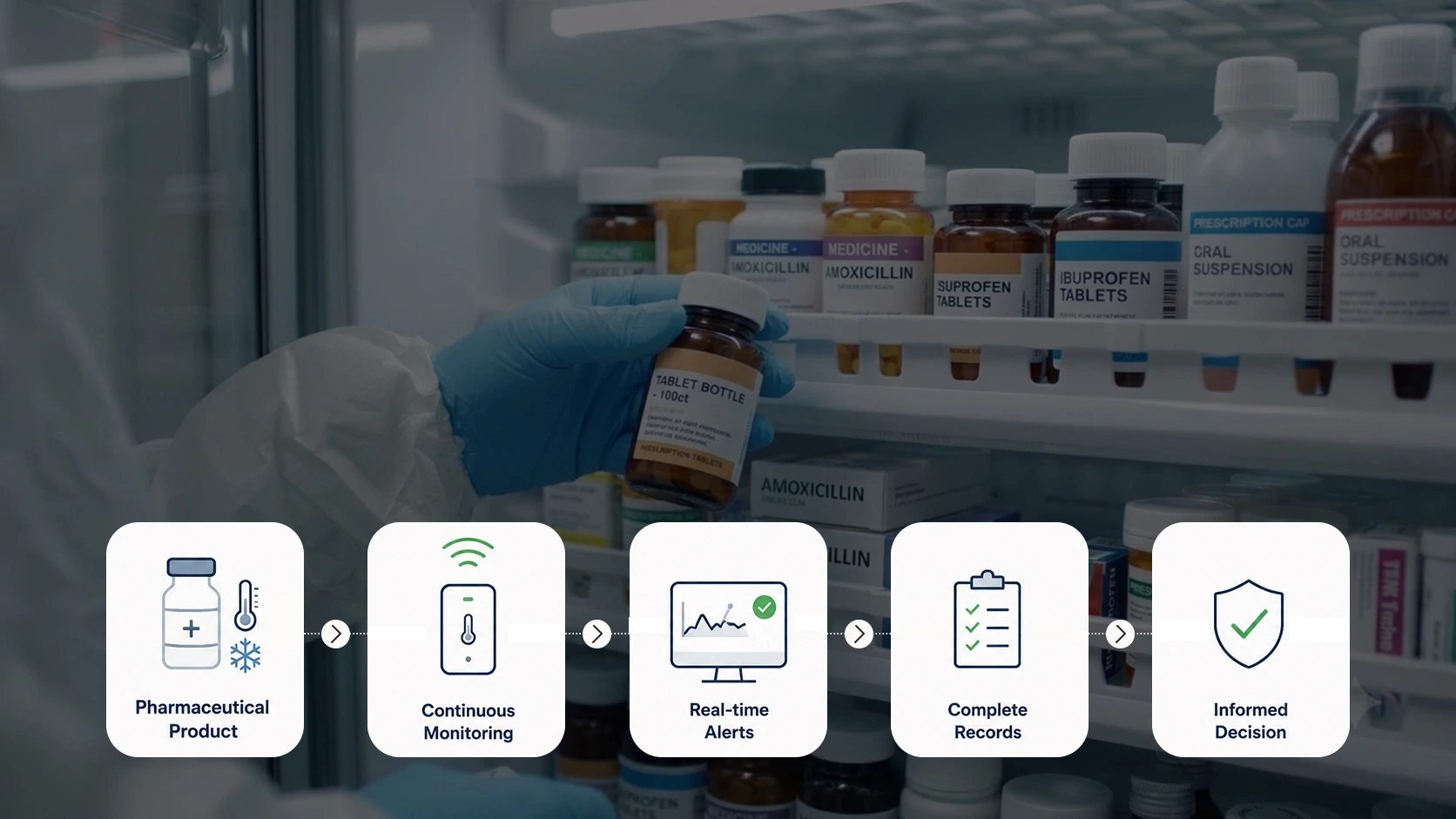
Many pharmaceutical products depend on precise temperature control to maintain their quality and effectiveness. Vaccines, insulin, biologics, and certain medicines can lose their quality if they become too warm or too cold. This makes reliable pharmacy temperature monitoring essential throughout storage.
But keeping pharmaceutical products within the right temperature range is not limited to storage. The cold chain covers every stage of a product’s journey, from manufacturing and storage to transport and final delivery. Cold chain testing helps ensure that the required temperature is maintained at every stage.
So, how do you perform cold chain testing for pharmaceuticals? Here is a simple step-by-step guide to help you get started with cold chain testing for pharmaceuticals.
1. Understand the Product’s Temperature Requirements
Before you begin testing, start by checking the approved storage conditions for the product. Different pharmaceutical products have different temperature requirements, so knowing these conditions is essential.
For example, some products need to be stored between 2°C and 8°C, while others may require frozen or ultra-low temperature conditions. Certain products may also be sensitive to humidity or light.
These requirements should come from the product manufacturer or approved product documents. They provide the basis for setting the right limits for testing and monitoring.
2. Review the Complete Cold Chain Process
Temperature risks can occur at any point in the cold chain. That’s why testing should cover every location where the product is stored, handled, or transported.
This may include:
- Refrigerators and freezers
- Cold rooms
- Warehouses
- Insulated shipping boxes
- Refrigerated vehicles
- Loading and unloading areas
- Temporary storage locations
Looking at the entire process helps you identify where temperature changes are most likely to occur. For instance, products may be more vulnerable to temperature fluctuations when they are moved between a cold room and a delivery vehicle.
3. Prepare a Clear Testing Plan
Once you understand the process, the next step is to create a clear testing plan. It should outline what you are testing, how the test will be carried out, and what results are considered acceptable.
Your plan should include:
- The required temperature range
- The equipment or area being tested
- The number of temperature sensors
- Sensor placement
- Testing duration
- Normal and worst-case conditions
- Steps to follow if the temperature goes outside the limit
It is also important to assign responsibilities to team members in advance. This ensures everyone knows their role and what they need to do during the test.
4. Use Calibrated Temperature Sensors
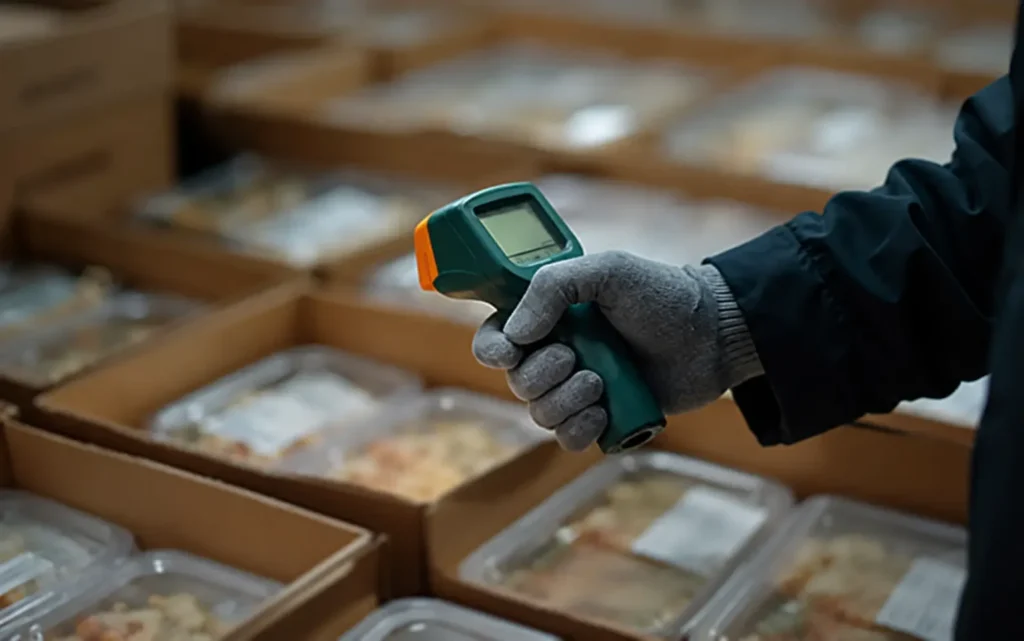
Accurate temperature readings start with the right equipment. Always use calibrated temperature sensors or data loggers to ensure the device is measuring temperature correctly.
Place sensors in different parts of the refrigerator, freezer, cold room, vehicle, or shipping box. Avoid placing all sensors in the center. Some should be positioned near doors, corners, shelves, cooling units, and other areas where temperature variations are more likely to occur.
Plumsense supports continuous temperature monitoring across refrigerators, freezers, and other critical pharmaceutical storage areas.
5. Perform Temperature Mapping
Temperature mapping helps you see whether every part of a storage area can maintain the required conditions. It can also reveal warm and cold spots that may go unnoticed during routine manual checks.
To get a complete picture of performance, testing should be carried out under different conditions, including:
- When the storage unit is empty
- When it is fully loaded
- During normal daily use
- When doors are opened frequently
- During a power failure
- When the cooling system stops working
Testing under different situations gives you a better understanding of how the equipment is likely to perform in real-world conditions.
6. Test Packaging and Transportation
The cold chain doesn’t end when a product leaves the storage facility. Pharmaceutical packaging and transportation also need to be tested, as products may experience temperature changes during long journeys, delays, or extreme weather.
Test insulated boxes, gel packs, dry ice, and other packaging materials to determine how long they can maintain the required temperature. Also consider factors such as outside temperature, journey time, loading procedures, and possible delivery delays.
If the same transport route is used throughout the year, testing it during both hot and cold seasons can provide a more complete picture of how reliably the packaging and transportation process performs.
7. Set Up Continuous Temperature Monitoring
A successful test confirms that the cold chain can maintain the required conditions. But what happens after the test? Regular monitoring is still essential to ensure those conditions are maintained over time.
A solution such as Plumsense can continuously track temperature and send alerts when conditions move outside the set limits. This allows the team to respond quickly, rather than discovering a problem during the next manual check.
The system can also keep historical temperature records in one place, making it easier to review past conditions, identify trends, and prepare for audits.
8. Review Every Temperature Excursion
A temperature excursion occurs when the temperature moves above or below the approved range. Every excursion should be investigated and properly recorded.
Start by finding out when it occurred, how long it lasted, and which products may have been affected. It is equally important to identify the possible cause. This could be a power failure, damaged equipment, an open door, incorrect packaging, or a transport delay.
Historical records from Plumsense can help teams pinpoint when the temperature change occurred. The quality team can then review the product information and determine what action, if any, is required.
9. Keep Complete Records
Good documentation is an important part of cold chain testing. Keep a record of every key detail, including the testing plan, sensor locations, calibration certificates, temperature records, excursion details, and corrective actions.
Cold chain testing should also be repeated after major equipment or packaging changes, when new transport routes are introduced, or following system failures. Depending on company procedures, periodic testing may also be required.
Final Thoughts
Cold chain testing plays an important role in protecting temperature-sensitive pharmaceutical products throughout storage and transportation. It involves understanding product requirements, mapping temperatures, testing packaging and transport conditions, and maintaining complete records.
With Plumsense, teams can monitor critical conditions, receive timely alerts, and access temperature records from a central platform. Combining continuous monitoring with proper cold chain testing can help reduce risks and support the safe handling of pharmaceutical products.