Meet Plumsense at IAAPA Expo 2026 · Booth W2282 · Orlando, FL · Nov 17–20, 2026
 Visit us at www.plumsense.com


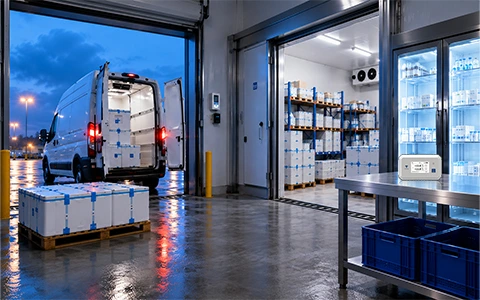
Medicines such as vaccines, insulin, biologics and some specialty drugs can be affected by temperature changes. Problems can happen during storage, loading, transportation or final delivery.
Pharmaceutical cold chain monitoring helps organizations track these conditions, identify temperature excursions and maintain useful records. However, monitoring equipment is only one part of the process. Companies also need trained staff, written procedures and a clear response plan.
This guide explains the main FDA and European requirements, common cold chain risks and the steps organizations can take when a temperature excursion occurs.
What Is Pharmaceutical Cold Chain Monitoring?
Pharmaceutical cold chain monitoring is the process of tracking and recording the conditions around temperature-sensitive medicines during storage, handling and transportation.
A monitoring process may include:
- Temperature sensors
- Data loggers
- Gateways
- Automated alerts
- Digital records
- Equipment calibration
- Temperature mapping
- Written response procedures
The purpose is to show whether products remained within their approved storage conditions.
There is no single temperature range that applies to every pharmaceutical product. Storage limits should come from the approved product label, manufacturer information and available stability data.
Why Cold Chain Monitoring Matters
Temperature-sensitive medicines can lose quality when they become too warm or too cold. The level of risk depends on the product, temperature reached and length of exposure.
Monitoring helps organizations:
- Identify equipment problems
- Detect temperature excursions
- Respond before more products are affected
- Maintain storage and transport records
- Support product-quality reviews
- Find repeated cold chain problems
- Prepare for inspections
A monitoring record does not automatically prove that a product is safe after an excursion. It provides information that the manufacturer or quality team can use when reviewing the event.
FDA Cold Chain Requirements for Pharmaceuticals
The FDA does not require one sensor, wireless network or software platform for every pharmaceutical operation. Requirements depend on the product, business activity and type of records being maintained.
Under 21 CFR 211.142, drug companies must have written warehousing procedures. These procedures should include suitable storage conditions for temperature, humidity and light.
21 CFR 211.150 also requires written distribution procedures and a system that allows the distribution of each drug lot to be identified when a recall is needed.
For biological products, 21 CFR 600.15 addresses temperatures during shipment.
In practice, a pharmaceutical cold chain process should include:
- Approved storage conditions
- Written monitoring procedures
- Suitable storage and transport equipment
- Accurate monitoring records
- Equipment checks and calibration
- A process for handling deviations
- A documented product-quality decision
The required details will depend on the product and the organization’s responsibilities.
EMA and European Good Distribution Practice
For distribution in Europe, organizations should also consider the official EU Good Distribution Practice guidelines.
These guidelines focus on maintaining the quality and integrity of medicines throughout distribution. They cover storage, transportation, documentation, training, equipment and temperature-excursion procedures.
Important parts of the EU GDP guidelines include:
- Storage areas should remain within acceptable temperature limits.
- Temperature mapping should be completed before a storage area is used.
- Monitoring devices should be placed based on mapping results.
- Monitoring equipment should be calibrated at defined intervals.
- Alarm limits should be properly set and tested.
- Transport conditions should follow manufacturer instructions.
- Temperature excursions during transport should be reported and investigated.
- Equipment and important processes should be qualified or validated when needed.
EU GDP also states that route risk should be considered when deciding where temperature controls are needed during transportation.
Electronic Records and 21 CFR Part 11
Some pharmaceutical monitoring systems create or maintain electronic records. When those records are required by FDA regulations, 21 CFR Part 11 may apply.
Relevant controls can include:
- Limited user access
- Secure records
- Audit trails
- Accurate record copies
- Data backup
- Record protection
- System validation
- Electronic-signature controls
A device or software platform should not automatically be called “Part 11 compliant.” Compliance depends on the system’s features, intended use, setup, validation and the procedures followed by the organization.
Companies should review their own record requirements with their quality and regulatory teams.
Pharmaceutical Products and Temperature Sensitivity
Different pharmaceutical products have different storage needs.
| Product category | Storage approach | Monitoring priority |
|---|---|---|
| Vaccines | Follow approved product labeling | High |
| Biologics | Often refrigerated, but product-specific | High |
| Monoclonal antibodies | Follow manufacturer instructions | High |
| Insulin products | Follow product-specific labeling | High |
| Controlled room-temperature medicines | Follow approved temperature limits | Based on product risk |
This table provides general examples only. Always follow the approved storage instructions for the specific product.
Factors that can affect an excursion review include:
- Highest or lowest temperature reached
- Length of exposure
- Product type
- Packaging
- Previous temperature exposure
- Available stability data
- Manufacturer guidance
Where Cold Chain Problems Can Happen
A product may be stored correctly at a warehouse but still experience problems elsewhere in the journey.
Loading and unloading areas
Products may be exposed while moving between a warehouse and vehicle. Delays, open doors and poor planning can increase the risk.
Storage facilities
Refrigerator failure, power loss, poor airflow or incorrect sensor placement can create temperature problems.
Transportation
Vehicle problems, damaged packaging, long delays and unsuitable routes may affect product conditions.
Transfer locations
Products may wait at distribution hubs, airports or loading docks. These temporary locations can create gaps in the monitoring process.
Final delivery
A package may be left outdoors, delivered late or kept outside controlled storage for too long.
Pharmacies and clinics
Refrigerator doors left open, power failures and staff errors can affect medicines after delivery. Reliable pharmacy temperature monitoring can help teams identify these problems earlier.
How Is a Pharmaceutical Cold Chain Tested?
Cold chain testing checks whether the required conditions can be maintained during normal storage and transportation.
Testing may include:
- Temperature mapping
- Storage-equipment checks
- Shipping-container testing
- Route studies
- Alarm testing
- Power-failure testing
- Review of sensor placement
- Packaging studies
- Equipment calibration
Temperature mapping helps identify warmer and colder areas inside a refrigerator, warehouse or transport vehicle. Sensors can then be placed where important temperature changes are most likely to happen.
Testing should be completed before a new storage area, shipping container or transport route is used. It may need to be repeated after major changes to equipment, layout, packaging or operating procedures.
How to Handle a Pharmaceutical Temperature Excursion
A temperature excursion happens when a product is exposed to conditions outside its approved range.
When an excursion is found:
- Identify the affected products, shipment or storage area.
- Separate the products from usable inventory.
- Clearly mark them as “Do Not Use.”
- Record the date, time, temperature and length of exposure.
- Review data from the monitoring device.
- Check the storage equipment, packaging or vehicle.
- Contact the manufacturer or responsible quality team.
- Review available stability information.
- Document the decision about the product.
- Correct the cause of the problem.
Do not use, return or discard the affected product until an authorized person has reviewed the available information.
The final decision may be to release, test, return or destroy the product. It should be based on product information and a documented quality review—not only on the temperature reading.
For more information, read our guide to pharmaceutical cold chain temperature excursions.
How Long Should an Excursion Investigation Take?
The investigation should begin as soon as the excursion is found. There is no single completion time for every event.
The time needed can depend on:
- Number of products involved
- Severity of the exposure
- Available temperature records
- Manufacturer response time
- Stability information
- Patient risk
- Company procedures
Affected products should remain separated until the review is complete and an authorized decision has been documented.
Does Every Temperature Excursion Cause a Recall?
No. A temperature excursion does not automatically result in a recall, FDA warning letter or product loss.
The organization must first determine whether the exposure may have affected product quality. This review can include monitoring records, approved storage conditions, stability data and manufacturer guidance.
A recall may be considered when affected products have already been distributed and there is a reason to believe their quality, safety or effectiveness may have been affected.
Complete records make it easier to understand what happened. Missing or unclear records can make the investigation more difficult.
Technology Used for Pharmaceutical Temperature Monitoring
Different monitoring tools support different parts of the cold chain.
Sensors
Sensors measure temperature, humidity or other environmental conditions.
Data loggers
Data loggers collect and store readings. Some are checked after delivery, while connected models can transfer readings during storage or transport.
Gateways
A gateway receives information from nearby sensors and sends it to an online monitoring platform.
Alerts
Alerts can notify responsible staff when readings move outside selected limits. Alert settings should match product requirements and company procedures.
Digital records
Digital records allow teams to review trends, investigate excursions and prepare reports. Access controls, backups and audit trails may be needed depending on how the records are used.
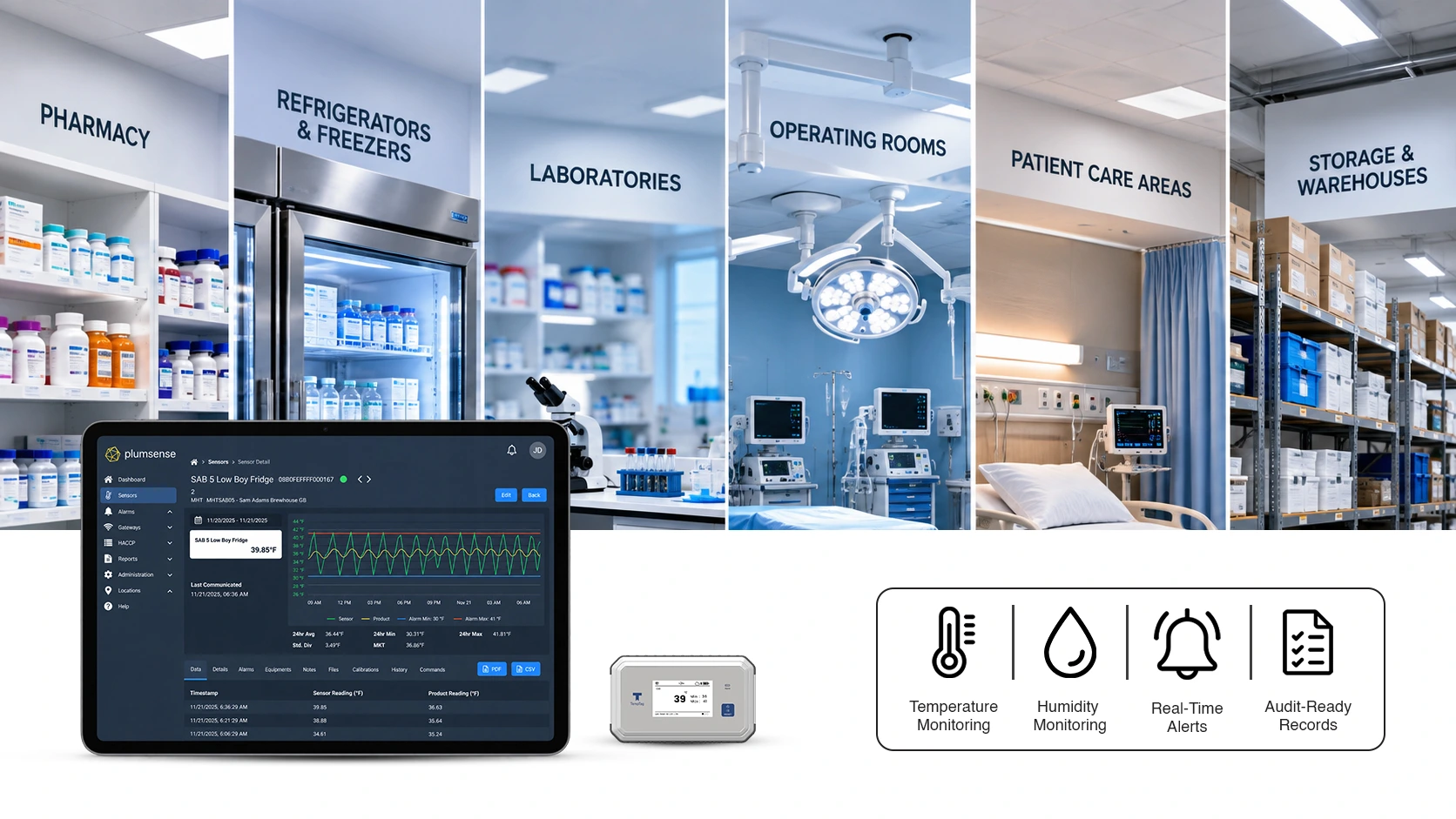
Plumsense provides monitoring tools that help organizations collect temperature readings, receive alerts and maintain digital records. The system should be selected and configured based on the product, location, risk and applicable requirements.
Steps for Building a Reliable Monitoring Process
1. Review the cold chain
List the products, storage locations, transport routes and transfer points that need monitoring.
2. Confirm product limits
Use approved labeling and manufacturer information to set suitable temperature limits.
3. Check storage areas
Complete temperature mapping where needed and place monitoring devices based on the results.
4. Select suitable equipment
Choose sensors, data loggers and gateways that match the required range, accuracy and operating environment.
5. Calibrate monitoring devices
Follow a planned calibration schedule and maintain calibration records.
6. Configure and test alerts
Set alert limits, identify who should receive alerts and regularly test the notification process.
7. Write response procedures
Explain who will separate products, review data, contact the manufacturer and document the final decision.
8. Train staff
Train employees who store, transport or handle temperature-sensitive products.
9. Review records
Regularly check temperature trends, missed readings, alarms and repeated equipment problems.
10. Improve the process
Update monitoring points and procedures when products, equipment, layouts or transport routes change.
Final Thoughts
Temperature-sensitive medicines need suitable conditions throughout storage, handling and transport. A reliable process includes suitable equipment, trained staff, clear procedures and complete records.
Plumsense helps organizations monitor temperature, receive alerts and review digital records across cold chain operations. Each monitoring process should be planned around the products, risks and requirements of the organization.
Frequently Asked Questions
Yes. The system is designed for frontline teams, with simple mobile workflows that require minimal training.