Meet Plumsense at IAAPA Expo 2026 · Booth W2282 · Orlando, FL · Nov 17–20, 2026
 Visit us at www.plumsense.com



Overview
Industry: Food Service & School Nutrition
Scale: Mid-sized school district with 12 school cafeterias
Application: Food safety temperature
monitoring with HACCP compliance
Challenges:
A school district in the Midwest was wasting food and money – a lot of it. Their cafeteria managers used old
thermometers and hand-written temperature logs to check refrigerators. But there were big problems:
The Real Issues:
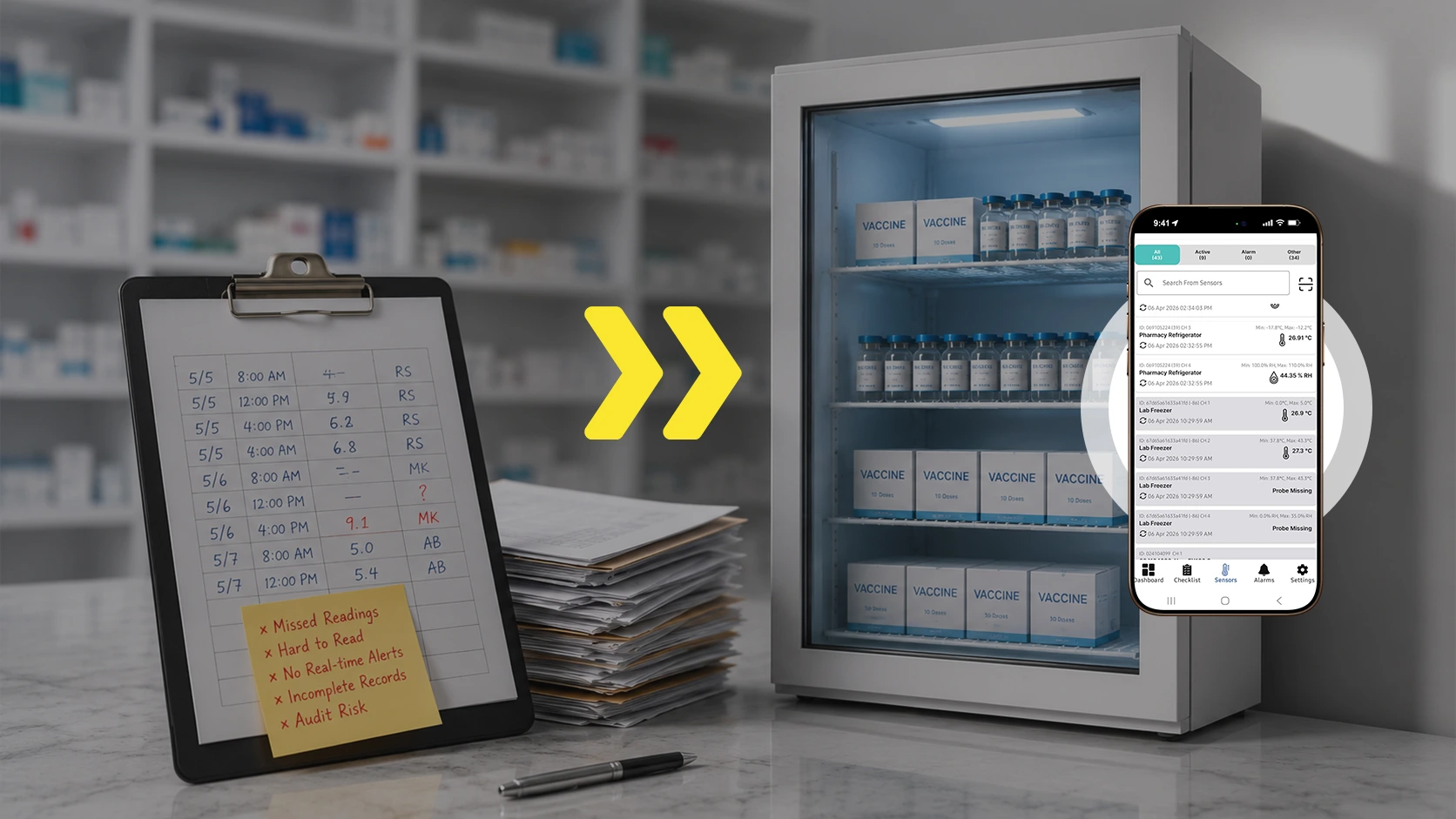
- Manual temperature checks – someone had to walk around and check each cooler
manually, sometimes getting missed - No real-time alerts – if a refrigerator broke down after hours, nobody knew until morning, and all the
food inside was wasted - Missed HACCP compliance – health inspectors found gaps in their temperature records
- Food waste costs – they were throwing away $500-$800 of food per month due to temperature problems
- Time wasted – cafeteria staff spent 4+ hours per week on temperature checks instead of preparing food
- No proof during audits – when inspectors came, they couldn’t show continuous monitoring
The real breaking point came when a refrigerator failed over a weekend at one location. They threw away $2,000 worth of
fresh food – all wasted because they didn’t know about the problem until Monday morning.
Solution
The school district implemented Plumsense’s wireless temperature monitoring system, specifically designed for food
safety and HACCP compliance.
Here’s what the system does:
Continuous Temperature Monitoring in All Coolers
- Small sensors are placed in each refrigerator, freezer, and cold storage area
- Automatic temperature readings every 10 minutes
- Works even during power cuts (sensors have backup power)
- Data stored in a secure cloud system
Smart Alert System for Food Safety
- Instant text and email alerts if the temperature goes above 41°F (for cold food) or below 0°F (for freezers)
- Staff can see exactly when the problem happened and fix it fast
- Alerts go out before food spoils – usually, they have 1-2 hours to move food to good equipment
- No more morning surprises
HACCP Compliance Automated
- System tracks temperature automatically – no hand-writing logs
- Shows 100% continuous monitoring for health inspectors
- Pre-built reports for compliance audits (food safety, HACCP, state requirements)
- Time-stamped records prove everything was checked
Easy to Use for Busy Cafeterias
- Staff don’t need training on complex software
- See alerts on phone or computer right away
- The main dashboard shows all 12 cafeterias in one view
- One person can manage monitoring for the whole district
Installation and Training:
WeekActionWeek 1Sensors delivered and installed at 3 pilot schoolsWeek 2Staff training and
system testingWeek 3Full rollout to the remaining 9 schoolsWeek 4The system is live at all 12 locations
Results
The school district saw big improvements in food safety and costs:
Cut Food Waste Dramatically:
- Monthly food spoilage: $600/month → $50/month (92% reduction)
- Annual savings: $6,600 just from preventing food waste
- No more throwing away fresh food because of temperature failures
Freed Up Staff Time:
- Temperature checking time: 4 hours/week → 30 minutes/week (93% reduction)
- That’s 3.5 hours per week that cafeteria staff now use for actual food prep
- Better meals for students, less time on paperwork
Perfect Health Inspections:
- Health department visit: Zero violations (down from 4-5 previous violations)
- First time the district showed “full continuous monitoring.”
- Inspectors commented on how clean and professional the records were
Money Back in the Budget:
- Food waste reduction: $6,600/year
- Staff time saved (3.5 hours × $18/hour × 52 weeks): $3,200/year
- System cost: $9,000 one-time, $1,200/year to maintain
- Payback period: 16 months (and those savings keep coming year after year)
What Really Mattered: During one month, Plumsense detected a refrigerator failure at School #7 at 11 PM. Staff moved the
food to backup coolers before any spoilage. That one alert saved $1,500 worth of food. In just that one month, the
system paid for 2 years of service.
Key Benefits for Food Service
- Food Safety You Can Prove Every meal, every day, with automatic temperature
records. No more guessing. - Money Stays in the Budget. Less food waste means more money for better ingredients and meals for
students. - Staff Happy Cafeteria teams spend less time on temperature checks and more time on
what they do best – feeding students. - Compliance Stress Gone. Health inspectors see a professional, fully compliant operation. Audits are
easy. - Protect Your Reputation. If something does go wrong, you have proof you were monitoring. That protects
the school legally.
Conclusion
For school districts, food waste is both a money problem and a safety problem. Handwritten temperature logs don’t give
you real-time protection or proof of compliance.
This school district proved that wireless temperature monitoring works:
- 92% reduction in food spoilage
- Zero violations in health inspections
- 3.5 hours per week of staff time freed up
- Payback in 16 months, then pure savings
If your school is throwing away food, wasting staff time, or worried about health inspections, Plumsense solves all
three problems at once.
Ready to cut food waste and protect your students?
Request a demo today and see how Plumsense makes
school food safety simple and automatic.
Frequently Asked Questions
$600/month to $50/month. That’s $6,600 in annual savings just from preventing food spoilage. Most school
districts see 70-95% waste reduction when they switch from manual temperature checks to automated
monitoring.
food waste savings alone ($6,600/year savings ÷ $9,000 system cost = 16 months). When you add staff time
savings (3.5 hours per week freed up = $3,200/year), payback drops to about 10 months. Many schools see
results even faster by preventing just one major refrigerator failure.
violations after implementing automated temperature monitoring. Health inspectors require proof of 100%
continuous monitoring with time-stamped records. Automated systems provide this proof automatically, while
manual temperature logs often fail because staff forget entries or records get lost.
reduction. That’s 3.5 hours per week (or 182 hours per year) freed up for actual food prep and serving
students. At $18/hour, that equals $3,200 in annual labor savings for the district.
notification) the moment the temperature goes outside a safe range. In this case study, a refrigerator failure at 11 PM triggered an
alert. Staff immediately moved food to backup coolers before any spoilage occurred, saving $1,500 worth of
food in that single incident. Without monitoring, they would have discovered the problem on Monday morning
with everything spoiled.