Meet Plumsense at IAAPA Expo 2026 · Booth W2282 · Orlando, FL · Nov 17–20, 2026
 Visit us at www.plumsense.com



In many hospitals, clinics, labs, and pharmacy storage rooms, staff still walk from unit to unit with clipboards, recording refrigerator and freezer readings by hand. But manual temperature logs in healthcare are no longer just inefficient – they are a serious operational and compliance risk. When a reading is missed, when a unit drifts out of range overnight, or when an audit reveals incomplete logs, the consequences can include spoiled vaccines, compromised medications, failed inspections, and avoidable patient safety concerns. CDC guidance now emphasizes continuous digital monitoring for vaccine storage, and NIST notes that continuous recording has increasingly replaced handwritten sheets because spot checks can miss damaging excursions.
For U.S. healthcare facilities, this is not just about convenience. It is about vaccine storage temperature compliance, protecting high-value inventory, and building an audit-ready process that does not depend on someone remembering to check a display at the right moment. FDA regulations require drug products to be stored under appropriate temperature conditions, so their identity, strength, quality, and purity are not affected.
The Hidden Risks of Manual Temperature Logs
Human Error Turns Small Gaps into Big Failures
Manual logging sounds simple, but it depends on perfect staff behavior in imperfect environments. Readings get missed during shift changes. Values get written down late. Staff may record current temperatures without knowing a refrigerator went out of range hours earlier. CDC specifically notes that devices showing only the temperature at the moment of inspection may fail to detect excursions between checks. A clipboard cannot tell you what happened at 2:07 AM. It cannot show how long a unit stayed warm after a power issue. And it cannot automatically alert anyone when the cold chain starts to fail. That is why a healthcare temperature monitoring system based on continuous data is becoming the standard, especially for vaccine, biologic, lab, and pharmacy storage.
No Real-time Alerts Mean no Chance to Intervene
This is one of the biggest flaws in manual monitoring. By the time a staff member arrives for the next scheduled check, the damage may already be done. CDC recommends digital data loggers because they can capture how long a unit has been outside the recommended range, not just whether it is currently in range. That matters because many healthcare products are highly temperature sensitive. FDA states that biological products require specific storage conditions to maintain safety, purity, and potency. During power failures or equipment issues, facilities are expected to record the duration of temperature exposure and assess product integrity.
Compliance Failures Are Often Documentation Failures
Healthcare audits do not just look at whether products were stored correctly. They also look at whether you can prove it. CDC requires vaccine temperature documentation that includes date, time, minimum/maximum temperatures, the name of the person recording the reading, and any action taken after an excursion. It also says temperature data should be retained for at least three years unless local rules require longer retention. When logs are handwritten, incomplete, or illegible, facilities create unnecessary audit exposure. This is why healthcare compliance with temperature logs need to be accurate, accessible, and complete.
Financial Loss Adds Up Fast
Temperature excursions do not just create paperwork. They can destroy expensive inventory. NIST notes that vaccines exposed to improper temperatures can lose potency, and that a single freezing event can cause irreparable damage. NIST also states that wasted vaccines from equipment and monitoring failures were creating significant monetary and public health costs, prompting better guidance and better monitoring practices.
Why Manual Systems Fail Silently
Manual systems rarely fail loudly. They fail quietly.
- The refrigerator starts drifting warmly overnight. Nobody knows.
- A freezer door is not fully closed after a late shift. Nobody knows.
- Breaker trips in a satellite clinic over the weekend. Nobody knows.
By Monday morning, staff may discover the problem only after inventory has already been exposed too long. FDA guidance for biologics makes clear that time and temperature duration matter during storage disruptions. Without continuous data, facilities may not know how long exposure lasted, making disposition decisions slower, harder, and riskier. CDC’s guidance effectively explains why manual temperature logs healthcare teams still use can fail silently: a spot check only shows one moment in time, while a digital data logger creates a continuous record and can trigger out-of-range alarms. This is also why refrigerator temperature monitoring in hospitals cannot rely on staff presence alone. If a system depends on someone being physically there to notice a problem, it is not truly a monitoring system. It is a delayed inspection process.
Impact on Healthcare Facilities
1. Patient safety risk
If vaccines, medications, blood products, or lab samples are exposed to improper temperatures, their effectiveness may be reduced. NIST warns that ineffective vaccines may be unknowingly administered because there is often no easy visual sign that a product has been compromised. 2. Inventory loss When temperature history is unclear, facilities often must quarantine product and seek manufacturer guidance. CDC instructs providers to label affected vaccines “DO NOT USE,” document the event, and contact the immunization program or manufacturer with the excursion data. 3. Audit and compliance exposure FDA requires appropriate storage conditions for drug products, and CDC requires detailed temperature documentation for vaccine storage. Missing or inconsistent records can weaken your position during audits, inspections, and internal reviews. 21 CFR 211.142 CDC Pink Book 4. Reputation damage A preventable cold chain failure can trigger wasted doses, patient recalls, staff retraining, and leadership scrutiny. In healthcare, operational trust matters. Silent failures erode trust quickly.
Manual Logs vs Automated Monitoring
| Area | Manual Logs | Automated Temperature Monitoring System |
| Monitoring frequency | Periodic spot checks | 24/7 continuous monitoring |
| Alerting | None unless staff notices | Instant SMS/email/app alerts |
| Excursion visibility | Often missed between checks | Full event history with duration |
| Audit readiness | Paper logs can be incomplete or illegible | Cloud-based, searchable, audit-ready temperature logs |
| Labor required | High staff dependency | Lower manual workload |
| Trend analysis | Limited | Dashboard analytics and reporting |
| Compliance support | Reactive | Proactive and documented |
| Multi-site oversight | Difficult | Centralized visibility across locations |
CDC recommends continuous monitoring and recording devices for vaccine storage units, including digital data loggers set to record at least every 30 minutes, along with weekly trend review and retained documentation. That guidance strongly favors automation over manual-only processes.
What Modern Healthcare Facilities Are Switching To
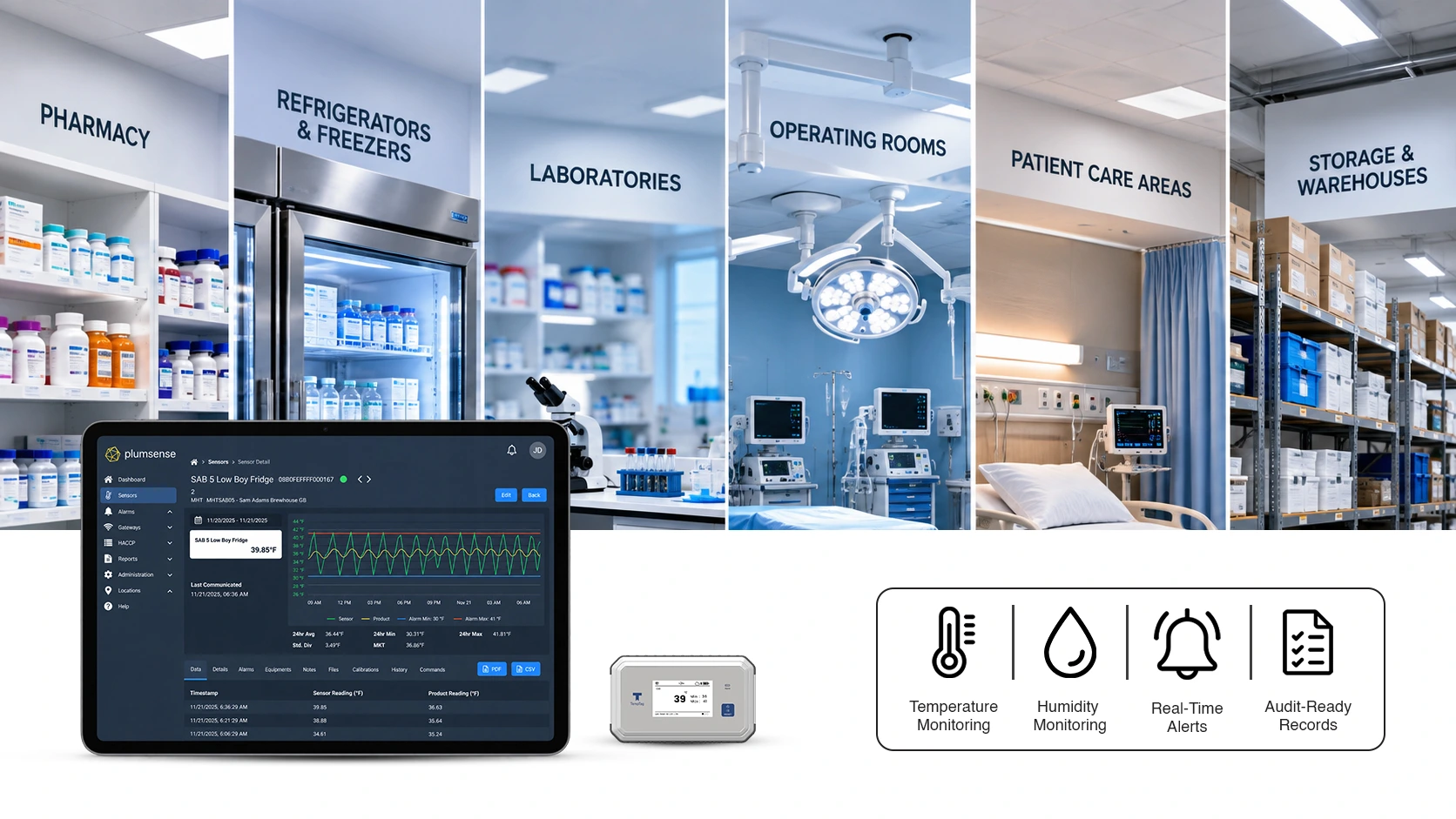
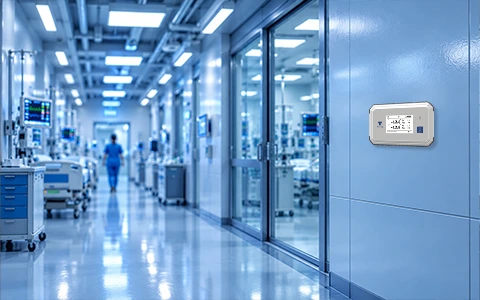
The shift is clear: hospitals, labs, and pharmaceutical storage teams are adopting hospital temperature monitoring IoT platforms instead of relying on paper logs and isolated thermometers. A modern healthcare temperature monitoring system typically includes:
- IoT-enabled wireless sensors
- Continuous refrigerator, freezer, and room monitoring
- Real-time dashboards
- Instant SMS, email, or app-based alerts
- Cloud-based audit logs
- Multi-site visibility
Historical reporting for inspections and internal QA CDC’s current vaccine guidance centers on digital data loggers with continuous recording, min/max visibility, alarms, and calibrated probes. That is the operational logic behind the broader move toward digital temperature logging in healthcare.
Benefits of Automated Temperature Monitoring
1. 24/7 monitoring without data gaps An automated temperature monitoring system does not sleep, take weekends off, or rely on someone remembering a checklist. It captures continuous data across all hours. 2. Instant alerts before product is lost When temperatures move out of range, teams can act immediately instead of discovering the problem later. CDC’s excursion guidance stresses rapid identification and action to prevent vaccine waste and the potential need to revaccinate patients. CDC Excursion Guidance 3. Audit-ready reports Instead of pulling binders and sorting handwritten sheets, teams can produce digital logs, trend reports, and excursion records quickly. That makes audit-ready temperature logs into a practical compliance asset, not an afterthought. 4. Less manual workload Nursing, pharmacy, and lab teams already carry enough administrative burden. Automation reduces repetitive checks and lets staff focus on patient care and operational priorities. 5. Stronger compliance posture CDC recommends continuous digital monitoring for vaccine storage, while FDA requires appropriate temperature-controlled conditions for drug products and stresses documenting temperature duration during disruptions. Automated logs help facilities meet both operational and documentation expectations more consistently.
Why Plumsense Fits This Shift
For healthcare teams trying to move beyond manual logging, the goal is not just “more technology.” It is more control, more visibility, and fewer blind spots. Plumsense can be positioned as a practical step forward for facilities that need:
- Real-time monitoring across refrigerators, freezers, and critical storage areas
- Zero data gaps from overnight, weekend, or holiday periods
- Automated, audit-ready compliance logs
- Fast alerts when temperatures move out of range
- Easier oversight across multiple departments or locations
- Simpler integration into existing healthcare workflows
That is the real value of a modern cold chain monitoring healthcare platform: fewer surprises, faster response, and more confidence during audits.
Conclusion: Manual Logging Means Risk. Automation Means Control.
Manual logs may feel familiar, but they leave too much to chance. In U.S. healthcare environments, missed readings, delayed discovery, incomplete documentation, and silent equipment failures create real exposure. CDC guidance already points facilities toward continuous digital monitoring, and FDA expectations reinforce the need for controlled conditions and defensible records. If your team is still depending on paper checks and delayed reactions, now is the time to modernize.
Automation creates control. Book a demo with Plumsense to switch to real-time monitoring.